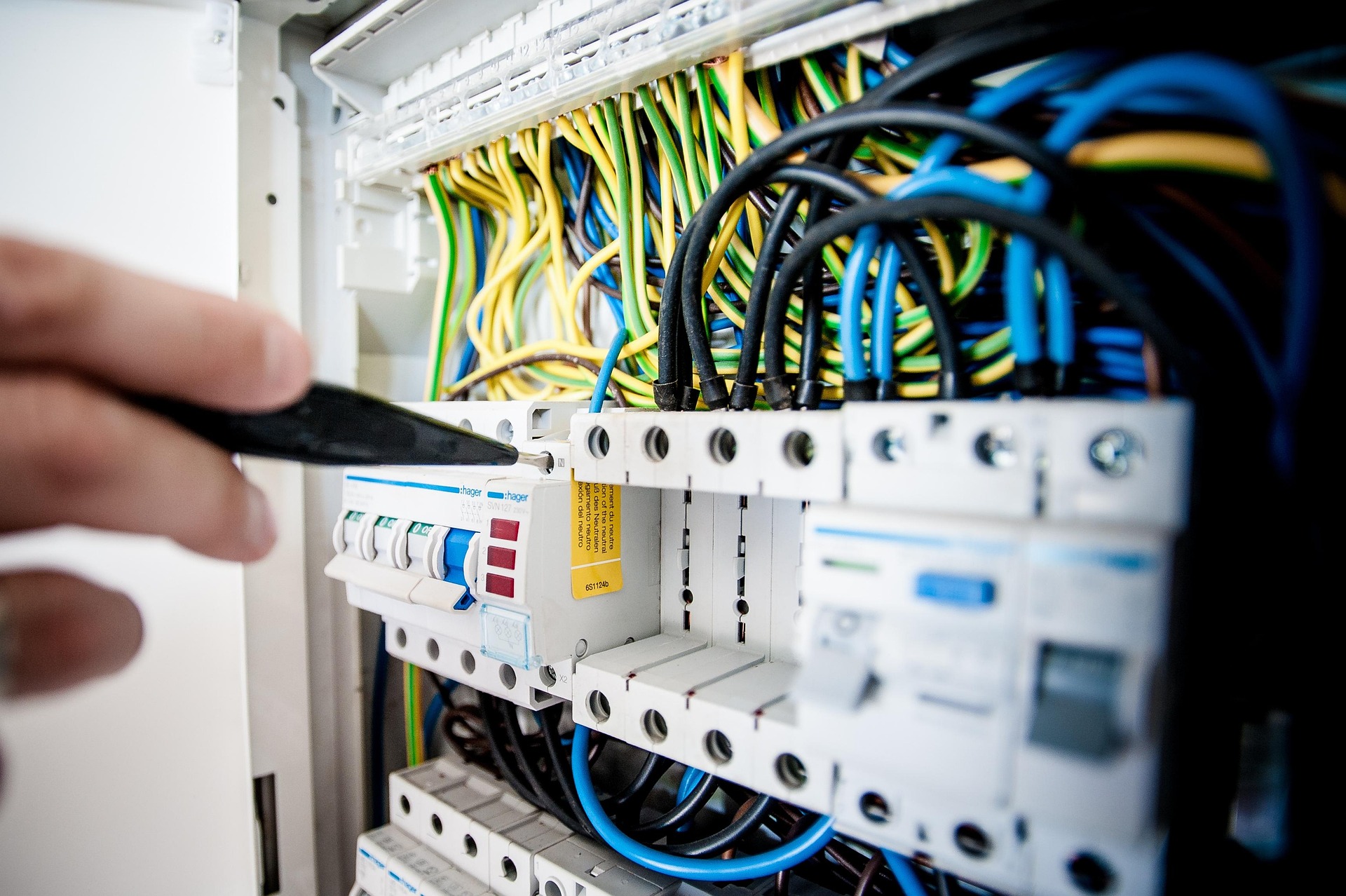
A consumer unit upgrade (what most people still call a fuse box) is one of the most quoted-for jobs in UK domestic electrics — and one of the most oversold. Some upgrades are genuinely mandatory before other work can proceed safely; plenty of others are recommended by an electrician who’d simply rather not leave an ageing board in place. Here’s how to tell the difference, and what it actually costs.
What a consumer unit upgrade involves
The consumer unit is the box that distributes electricity around your home and protects each circuit with fuses, MCBs (miniature circuit breakers), or RCBOs (breakers with built-in earth leakage protection). An upgrade typically means replacing an old fuse-wire or partially-protected board with a modern metal-cased unit containing RCD or RCBO protection on every circuit, correct labelling, and surge protection where required. It’s a half-day to full-day job for a qualified electrician, involving isolating the supply, disconnecting and reconnecting every circuit, and testing the whole installation afterwards.
Typical UK cost
For a standard domestic property, a straightforward consumer unit replacement typically costs £350–£800, including the new unit, RCD/RCBO devices, and labour. A full RCBO board (individual earth-leakage protection per circuit, rather than one or two shared RCDs) costs more than a dual-RCD split-load board, often pushing the total to £600–£1,200. If the electrician finds additional problems during testing — degraded cabling, incorrect earthing or bonding, or circuits that need splitting to meet current RCD requirements — remedial work can add several hundred pounds more. London and South East prices typically run 15–25% above the rest of the UK.
When an upgrade is genuinely mandatory
A consumer unit upgrade isn’t required just because a board is old. It becomes genuinely necessary — not merely advisable — in situations including:
- A dangerous EICR finding. An Electrical Installation Condition Report (EICR) that assigns a Code 1 (danger present) or Code 2 (potentially dangerous) to the consumer unit or its lack of protection means the issue must be addressed, and in practice this usually means replacement.
- Old fuse-wire (rewireable) fuse boxes. These offer no meaningful protection against overload or earth faults by modern standards and are routinely flagged as unsafe on an EICR.
- No RCD protection on relevant circuits. Since amendments to BS 7671 (the IET Wiring Regulations), RCD protection is required on the vast majority of domestic circuits, including sockets and cables buried in walls. A board with no RCDs at all typically fails inspection outright.
- Adding a new high-load circuit. Installing an EV charger, an electric shower, an induction hob, or similar high-current equipment often requires spare capacity and correctly rated protective devices that an old board simply doesn’t have — in which case the consumer unit has to be upgraded (or partially modified) before the new circuit can go in safely.
- Non-compliant enclosure material. Domestic consumer units are required to have a non-combustible or fire-resistant enclosure (metal, rather than older plastic-cased boards), following changes to BS 7671 addressing fire risk from arcing faults.
When it’s recommended but not strictly required
An electrician quoting to replace a board that already has adequate RCD protection, is in reasonable physical condition, and has enough spare ways for likely future circuits is offering a recommendation, not a requirement. Common “nice to have” reasons include: modernising an ageing but still-compliant board, improving circuit separation (so one tripped RCD doesn’t kill power to half the house), or future-proofing capacity before a loft conversion or extension. These are legitimate reasons to upgrade — just not ones that make the work mandatory on safety or compliance grounds. Get a second opinion, and ask for the specific regulation or EICR code being cited, if a quote frames a like-for-like-safe board as urgent.
Why this is notifiable work under Part P
Under Part P of the Building Regulations (England and Wales), installing or replacing a consumer unit is explicitly listed as notifiable electrical work — regardless of location in the property, unlike most other domestic electrical work, which is only notifiable in kitchens or “special locations” such as bathrooms. This means the work must be certified through one of three routes: self-certified by an electrician registered with a government-authorised competent person scheme (such as NICEIC, NAPIT, or ELECSA), certified by an independent third-party assessor, or notified to and signed off by your local authority building control body. Whichever route is used, you should receive a Building Regulations compliance certificate and a BS 7671 Electrical Installation Certificate once the work is complete — keep both, as they matter for home insurance, EICRs, and when selling the property.
Why this is not DIY work
Beyond the legal requirement to certify the work, a consumer unit sits at the point where your entire home’s supply is live and unprotected until correctly isolated — mistakes here risk fire, electric shock, and invalidate your home insurance if the work isn’t properly certified. This is one of the clearest cases in domestic electrics where “notifiable” also means “don’t attempt it yourself”: competent-person registration exists specifically because this work needs someone who can test, certify, and take responsibility for the whole installation, not just swap a box.
The bottom line
Budget £350–£800 for a straightforward like-for-like consumer unit upgrade, or £600–£1,200+ if a full RCBO board or remedial wiring work is needed. Whether it’s mandatory depends on your EICR result, your board’s age and protection, and whether you’re adding a high-load circuit — not simply how old the box looks. Exact costs always depend on your property’s existing wiring and the electrician’s findings on site, so get quotes from two or three electricians registered with a recognised competent person scheme before committing, and ask each one to specify which regulation or EICR code is driving the recommendation.
Sources: