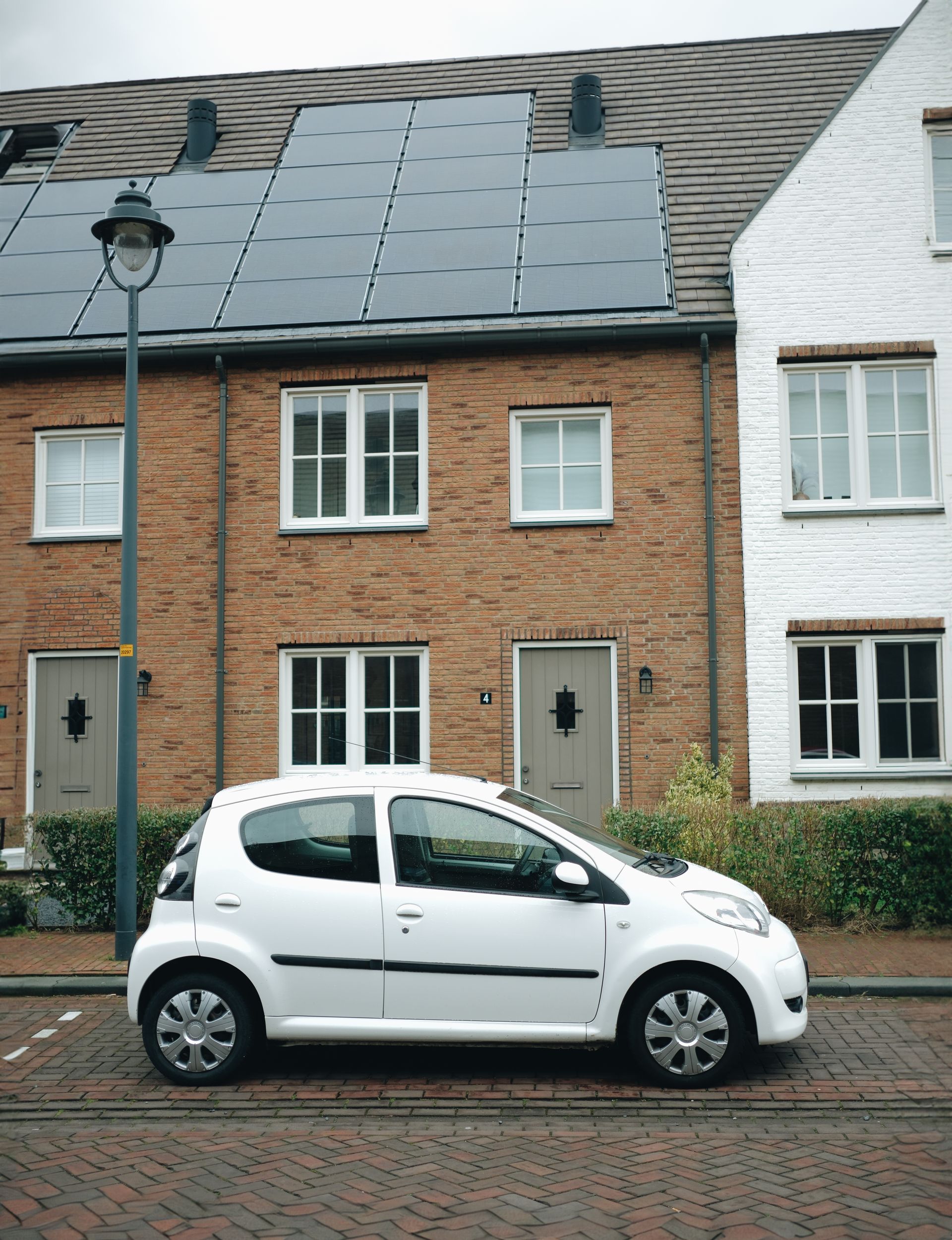
“Solar panels pay for themselves in X years” is the single most misleading sentence in home energy marketing, because X depends on a handful of variables that differ wildly from house to house. Here’s what actually drives the number, and a realistic range you can trust.
The variables that actually decide payback time
Payback time is simply: installation cost ÷ annual saving. The cost side is fairly predictable. The saving side is where most of the uncertainty — and most of the marketing sleight of hand — lives.
- System size and cost. Bigger systems cost more but generate more, so size alone doesn’t change payback much — what matters is cost per kWp installed, which varies by roof complexity, scaffolding access, and installer.
- How much of your generation you actually use yourself vs export. This is the variable marketing materials most often fudge. Electricity you generate and use immediately saves you the full retail unit price (26.32p/kWh under the current Ofgem cap). Electricity you export instead earns you the Smart Export Guarantee rate, which is typically much lower than the retail price. A quote that assumes you’ll use most of your solar generation yourself, when you’re actually out at work all day, will overstate your saving substantially.
- Smart Export Guarantee (SEG) rates. The SEG is a government-backed scheme requiring licensed electricity suppliers to pay households for solar (and other low-carbon) electricity they export to the grid, with tariffs varying supplier by supplier and set above zero but otherwise determined commercially. Rates differ significantly between suppliers and change over time, so it’s worth shopping around and checking current rates directly with suppliers or via Ofgem rather than trusting an old quote.
- Roof orientation and shading. A south-facing, unshaded roof generates meaningfully more than an east/west-facing one, and a roof with any significant shading (chimneys, trees, neighbouring buildings) at certain times of day loses output disproportionately, because even partial shading of one panel can drag down a whole string’s output depending on the system design.
- Current electricity prices. The higher retail electricity prices are, the more each self-consumed kWh is worth, and the faster payback gets — which is part of why payback estimates from a few years ago, made under different price-cap levels, are now out of date.
Typical UK payback ranges — with the caveat that “typical” varies a lot
Energy Saving Trust puts the average UK solar PV installation at around £7,600 for a system of roughly 4.5 kWp, and — using July 2026 fuel prices and including export payments at a typical SEG-type rate of around 12p/kWh — estimates payback periods that vary noticeably by location:
- London: around 9 years
- Aberystwyth: around 9–10 years
- Manchester: around 10–11 years
- Stirling: around 11–12 years
That spread, for the same “average” system, comes down almost entirely to how much sunlight the roof actually receives across the year — solar irradiance in the UK is meaningfully higher in the south than in the north and west of Scotland. Layer in a badly-oriented or shaded roof, or a household that’s out all day and exports most of its generation at the lower SEG rate rather than using it, and payback can stretch well beyond that range. Layer in a south-facing roof and high daytime electricity use — a household working from home, or charging an EV at home during the day — and it can come in faster.
Treat any single-figure payback quote (“6 years!” or “4 years!”) with real scepticism unless it’s tied to your specific roof, your specific usage pattern, and current prices — not a generic average.
What marketing claims commonly get wrong
A few oversimplifications show up repeatedly in solar sales material and even in some online calculators:
- Assuming high or 100% self-consumption. Unless you have a battery, or you’re unusually well set up to shift usage (dishwasher, washing machine, EV charging, immersion heater diverter) to the sunniest hours, most UK households without a battery only use a minority to roughly half of what they generate, because solar output peaks in the middle of the day when many homes are empty or drawing little power. A calculation that assumes near-total self-consumption will make payback look much faster than it will actually be.
- Ignoring panel degradation. Solar panels don’t produce the same output forever — they degrade gradually, typically by a fraction of a percent each year, which is why manufacturers write this into their product warranties (commonly guaranteeing a set percentage of original output, such as roughly 85%, after 25 years) rather than promising flat output for the panel’s lifetime. A payback calculation that assumes year-25 output equals year-1 output is being optimistic, though the effect on payback time itself (which usually happens well within the first half of the panels’ life) is smaller than its effect on lifetime savings.
- Using unrealistic install costs. Some marketing quotes are built around a stripped-down system, or costed before accounting for scaffolding, roof condition, or consumer unit upgrades that a proper site survey turns up. Get a firm, itemised quote — not a “from” price — before doing your own payback sums.
- Quoting old SEG or electricity price figures. Because both SEG rates and the Ofgem price cap change, a payback figure calculated even a year ago may no longer reflect today’s numbers in either direction.
Why MCS certification matters here, not just for grants
To be eligible for Smart Export Guarantee payments at all, your installation generally needs to meet recognised standards — in practice this means using an MCS-certified installer and certified equipment, plus an export-capable smart meter so your supplier can measure what you send back to the grid. This isn’t just red tape: it’s also your main practical protection on installation quality, since a badly installed or wrongly sized system is one of the most common reasons real-world payback disappoints against the sales estimate.
The bottom line
Payback time for solar in the UK genuinely varies by several years depending on your roof, your usage pattern, and the deal you get on installation and export rates — a well-sited, well-used system in the south of England can pay back in under a decade, while a shaded, poorly-used system further north can take considerably longer. Don’t take a single marketing number at face value: check your own roof’s orientation and shading, be realistic about how much of the generation you’ll actually use versus export, and get quotes based on current prices rather than historic averages. Electricity prices, tariffs and household usage all vary by region and by home, so check the current Ofgem price cap and current SEG rates from suppliers, and get a proper site-specific assessment from an MCS-certified installer before committing.
Sources: